Trail nr. 1: Idrija –
the 500-Year Story of the Mercury Mine
HIKING AND CYCLING TRAILS


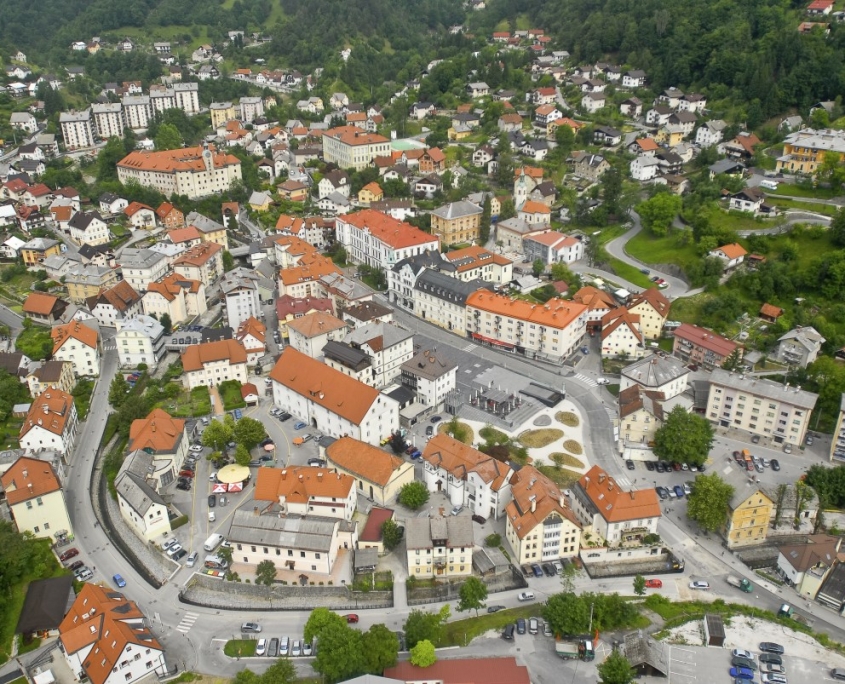
Through unique cultural monuments and buildings, the trail leading through the town of Idrija presents the underground treasure that – for 500 years – shaped the development of the town, provided financial income for generations of Idrija families, shaped the educational, cultural and social life of the town, and attracted the greatest minds of European natural science.
Idrija began to develop with the discovery of mercury in 1490, a few years before Christopher Columbus discovered America. A labyrinth of mine tunnels once stretched for hundreds of kilometres beneath the surface of the town, but today, the mine is no longer in operation. The mercury heritage of Idrija and Almadén, the world’s two largest mercury mines, was recognised for its outstanding universal value for all mankind and was inscribed on the UNESCO World Heritage List in 2012.
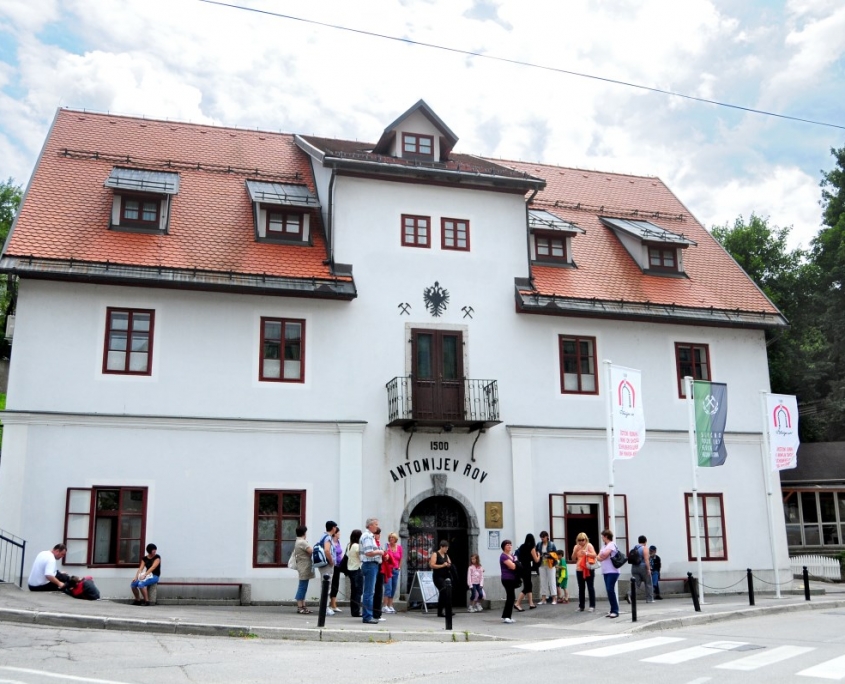
A visit to the Anthony’s Main Road, the oldest part of the Idrija mine, is always a unique experience. Accompanied by a guide, you will venture into the underground of Idrija through the tunnel where, for almost half a millennium, miners have been going to and from work. In the tourist part of Anthony’s Main Road, the old mining methods (manual excavation, loading and transporting ore in carts) are shown in the upper part, while the lower part shows machine excavation, drilling, mining and loading of ore with transport. The native mercury is another special feature that will fascinate you when visiting Anthony’s Main Road.
During a short walk through the old part of the town, many stories come to life. The discovery of rich cinnabar ore on 22 June 1508, during the excavation at a shaft near Nikova Stream, later called the Ahacius shaft after the day of its discovery, led to the discovery of a very rich cinnabar ore deposit at a depth of around 48 metres. This shaft stood on what is now St Ahacius Square. The discovery laid the foundations for 500 years of continuous mining in the Idrija basin. Every year on that day, the miners of Idrija commemorate this important event.
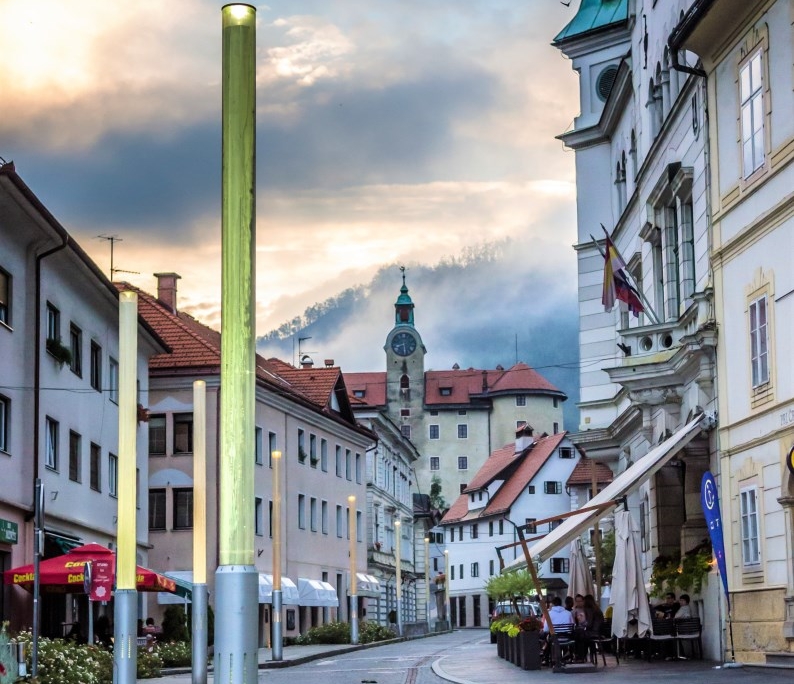

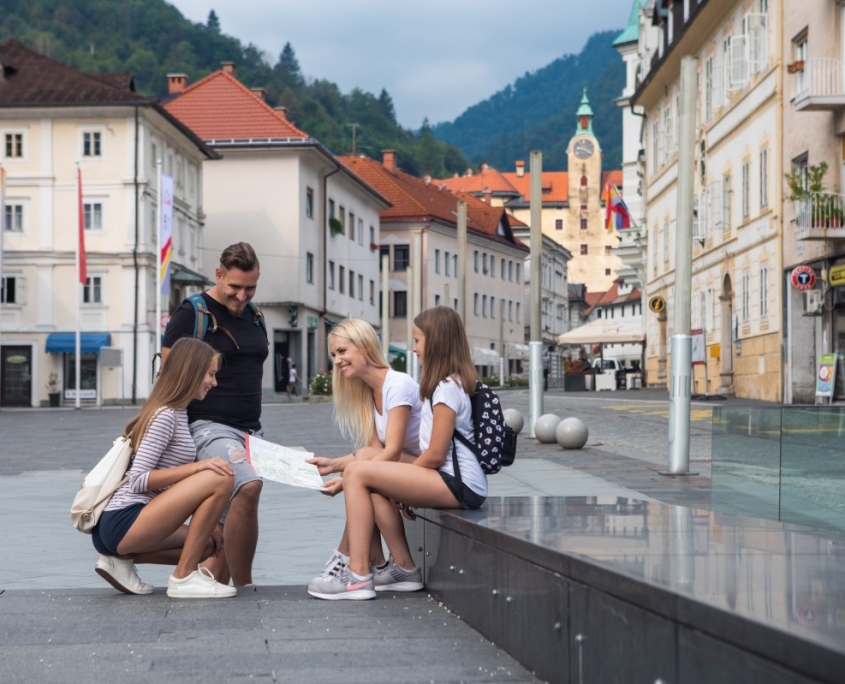
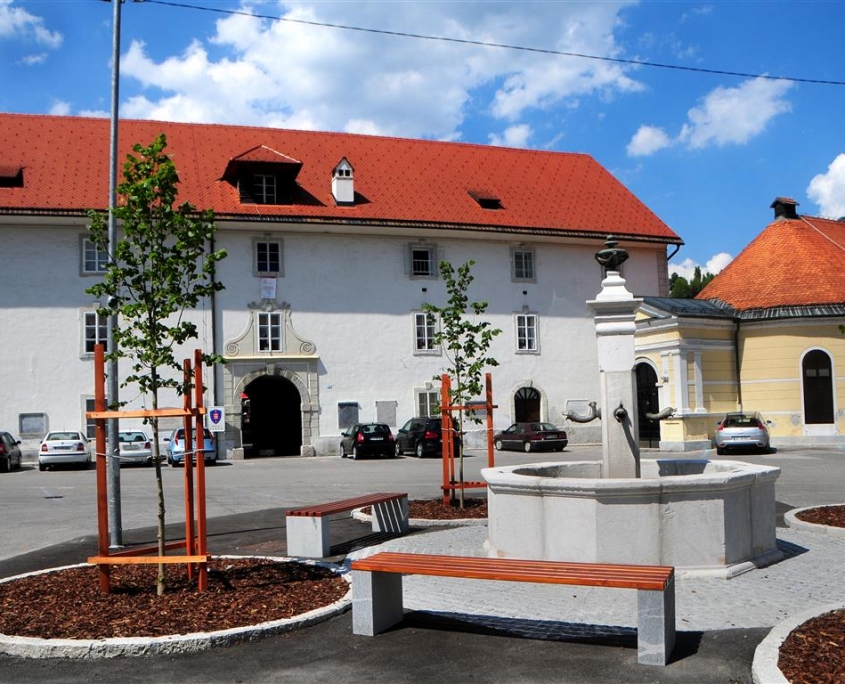
Among the buildings that surround the oldest square in Idrija, St Ahacius Square, the mine’s storage house (“magazin”) and the miners’ theatre, known as the first brick-built theatre building in Slovenia, stand out. Through the underpass of the “magazin”, you reach the restored Town Square, and the monumental Town Hall and Lace School, which has the reputation of being the oldest continuously operating lace school in the world.
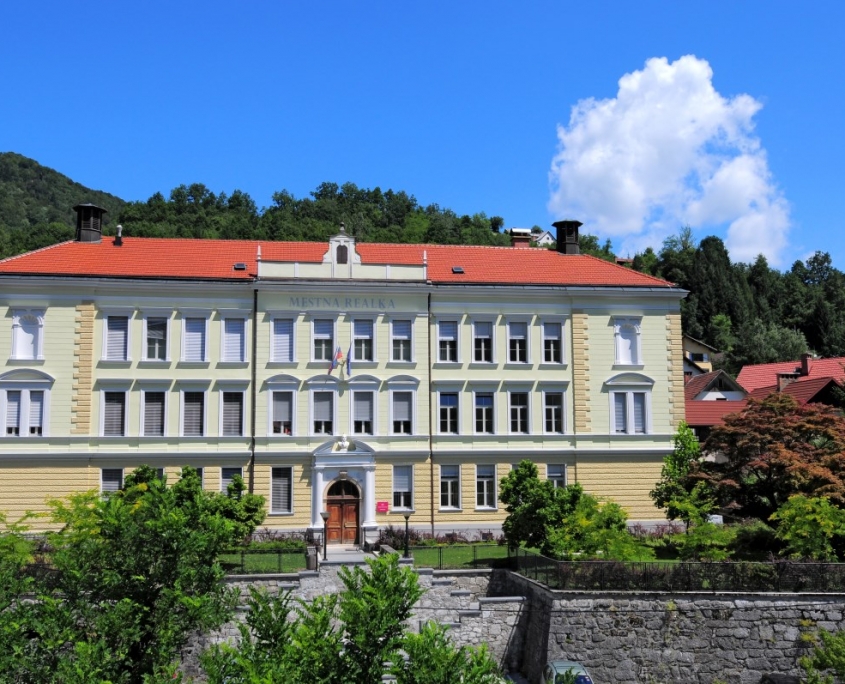
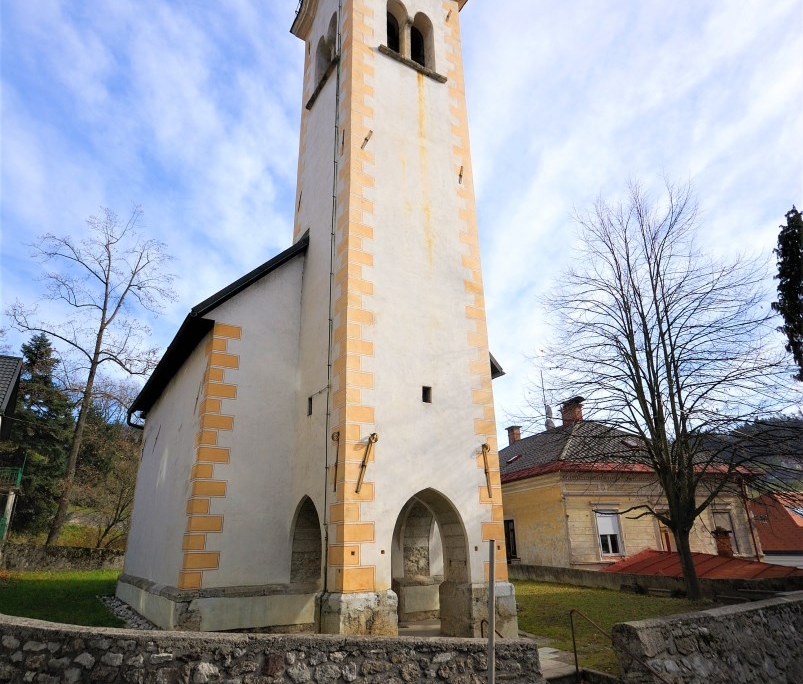
Follow the steep street past the old primary school to the Church of the Holy Trinity, where mercury was discovered. Legend has it that it was here that the precious metal was poured into the tubmaker’s wooden tub overnight.
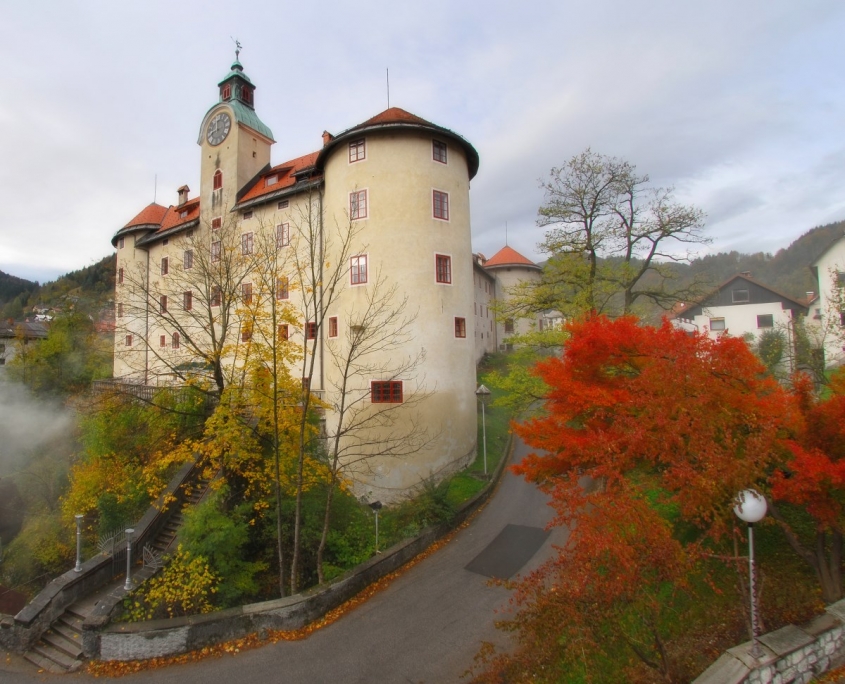
Passing the building of the first Slovenian non-classical secondary school (the Jurij Vega Secondary School), you reach the Gewerkenegg Castle, which served as the administrative building of the Idrija mine and for storing mercury. Today, it is home to the Idrija Municipal Museum, where visitors can relive the remarkable 500-year history of the town and the mercury mine, and learn about the history and beauty of Idrija’s handmade bobbin lace.
From the castle, follow the “Mercury Trail”, where the liquid metal was once transported to the castle and then sent out into the world, past the Chapel of St. John of Nepomuk, and on to Scopoli Square with the “Švica” building, where Johannes Antonius Scopoli, a world-renowned natural scientist, lived from 1754 to 1769. During his years in Idrija, he carefully prepared plant- and animal specimens and wrote letters to the famous Linnaeus in Sweden. It was in this house that Scopoli wrote his most famous works.
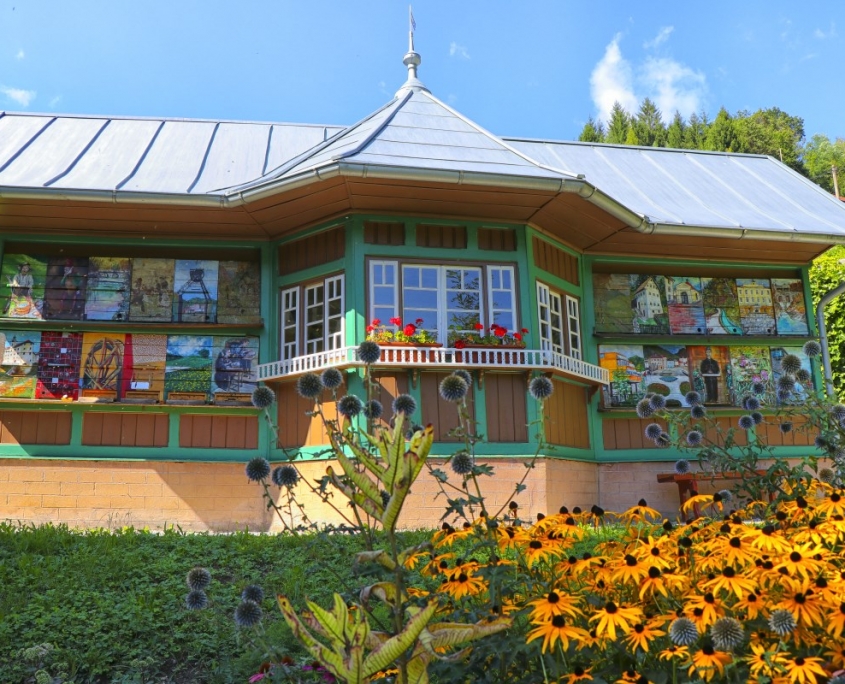
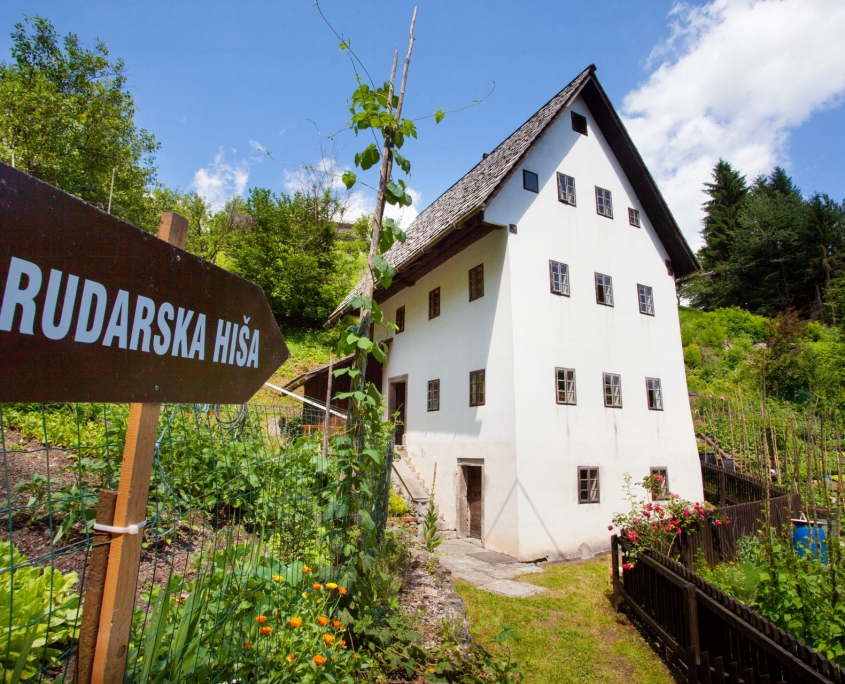
The Miner’s House, which is restored and set up as a museum, is also worth a visit and presents many stories from the life of the Idrija miner and his family. It was never luxurious, it was modest, but it was special, just like the people who – besides nature – co-created the history and the image of the Idrija basin.
In the immediate vicinity of the miner’s house, in the Francis Shaft building, you can see a collection of mining machinery and equipment. A special feature is the restored Kley’s pump from 1893 – the largest preserved steam engine in Slovenia and Europe! In the Mine Geology Collection, you will be fascinated by the presentation of an exceptional ore deposit and unique mercury ores and minerals.
On the other bank of the Idrijca River, in “Brusovše”, the Rudarska Street with its typical apartment buildings called “prhauz” tells the story of the humble life of Idrija’s miners. The first such building with 12 apartments was built there in 1872.

On the other side of Idrija, you can see another mine building – the Hg Smelting Plant. During a guided tour, through experiments, animations, videos and Hg-based devices, you will learn about the importance of this unique liquid metal, which has had great influence in the world, and its versatile applications in science, technology, industry, medicine, culture and everyday life from prehistoric times to the present day.
If you are fond of beautiful views, you can climb up to the “Raufnk” Hill with one of the most splendid views of the town of Idrija.
At the end of your exploration of Idrija, you should definitely not leave out the traditional Idrija žlikrofi, a culinary speciality traditionally made by miners’ wives.



Reaching the starting point: From Ljubljana, drive towards Idrija. In Idrija, turn left at the third traffic light into the centre of Idrija and park at the parking lot by the Komunala Company (above Spar Store).
Trail description: Start your tour of Idrija at the Idrija Tourist Information Centre (Address: Prelovčeva ulica 5), where you can see the exhibition in the Idrija Geopark Visitor Centre. From here, follow Prelovčeva Street towards the Lace School. Pass the building, turn left up the hill in the direction of the Psychiatric Hospital and keep left at the crossroad. You will see the Church of the Holy Trinity to the right. The road to the left will lead you to the Jurij Vega Secondary School. Below the building, turn left and go down the stairs to the road below the castle, which leads downhill. When you reach the Tourist Information Centre again, turn right onto Kosovelova Street and continue straight ahead until you reach the entrance to Anthony’s Main Road on your right. Turn left into St. Ahacius Square. On your right, you will see the yellow building of the Miners’ Theatre. Continue straight ahead, through the underpass of the “magazin” building and up the stairs to the Town Square. Cross the square and then turn right along the main road. At the building with the NLB sign, turn left into Rožna Street and continue straight ahead. When you reach the monument on Aumetz Square, turn left up the hill onto Bazoviška Street, where you will soon see the old Miner’s House on your right.