Architecture
IDRIJA UNESCO GLOBAL GEOPARK



The mining also contributed to the town’s social prosperity with all the necessary educational and cultural institutions which offered the locals the possibility of education and cultural activities. However, the way of building and the way of life was shaped by the environment. Preserved are mainly the buildings that were used for these activities in the period of intensive mining.

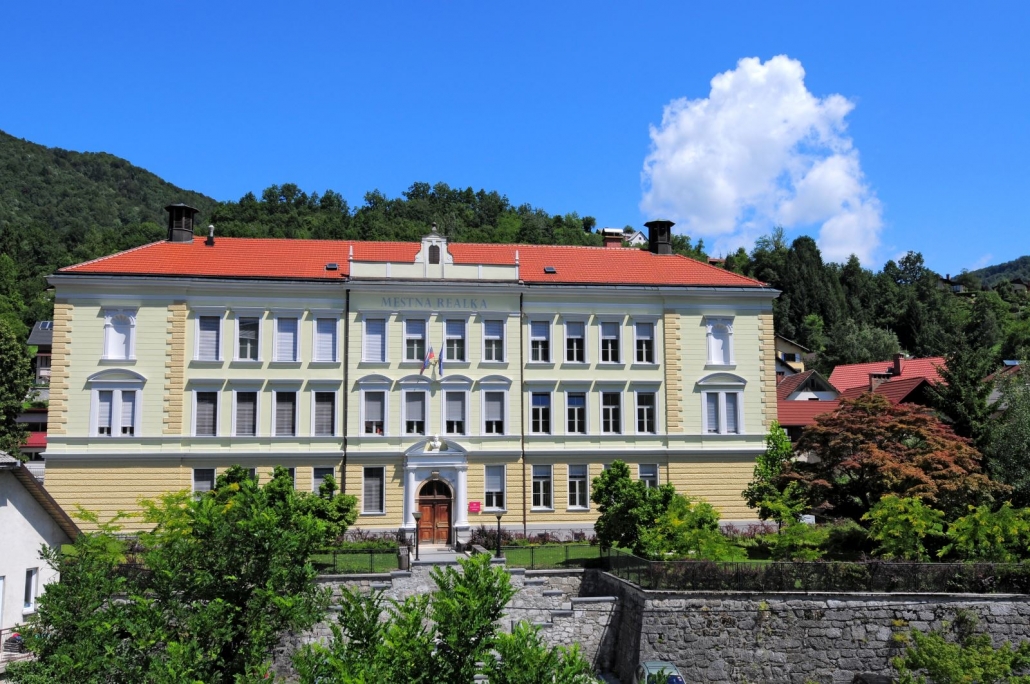
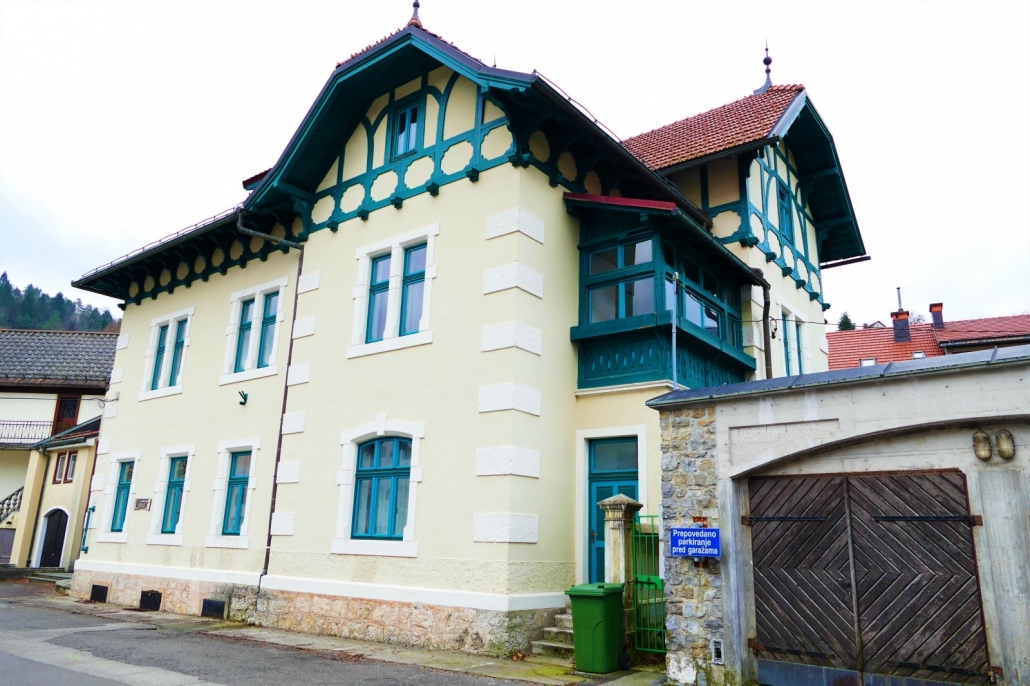
This building housing the Secondary School of Natural Sciences in Idrija was built with funds from the municipal budget in 1903 in Classicist style. Today, it is the location of the Idrija Secondary School and is named after Jurij Vega, the famous Slovenian mathematician. In 2008, it was extensively renovated.

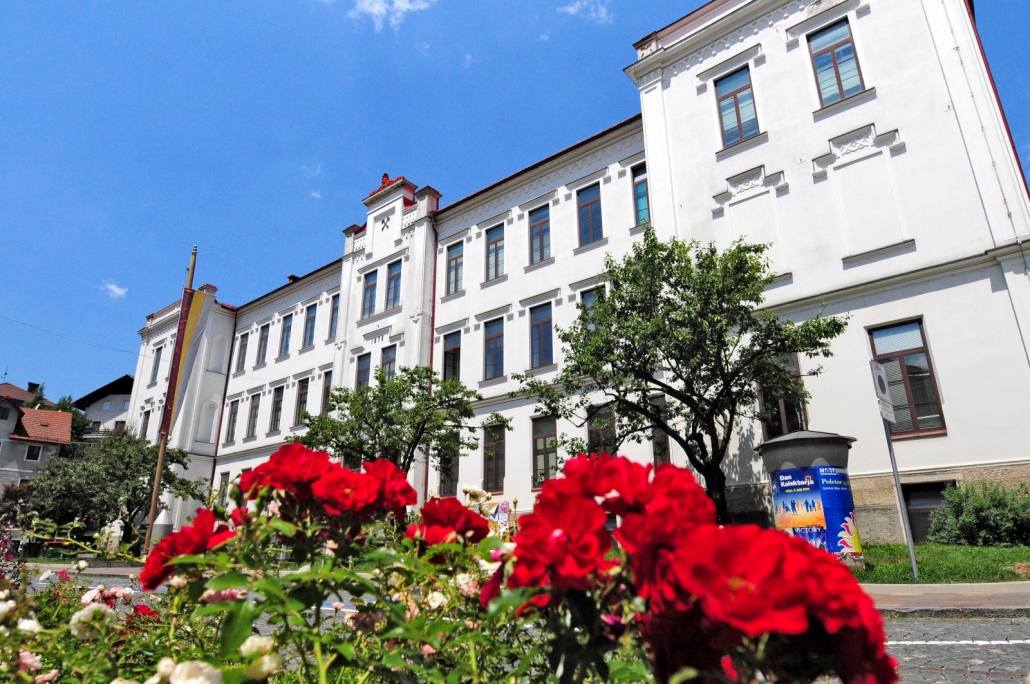
This monumental building of the former primary school was built in 1876. Today, the building continues to be the pride of the town and houses various cultural institutions such as the well-known Idrija Lace School and the International Centre of Idrija Lace.
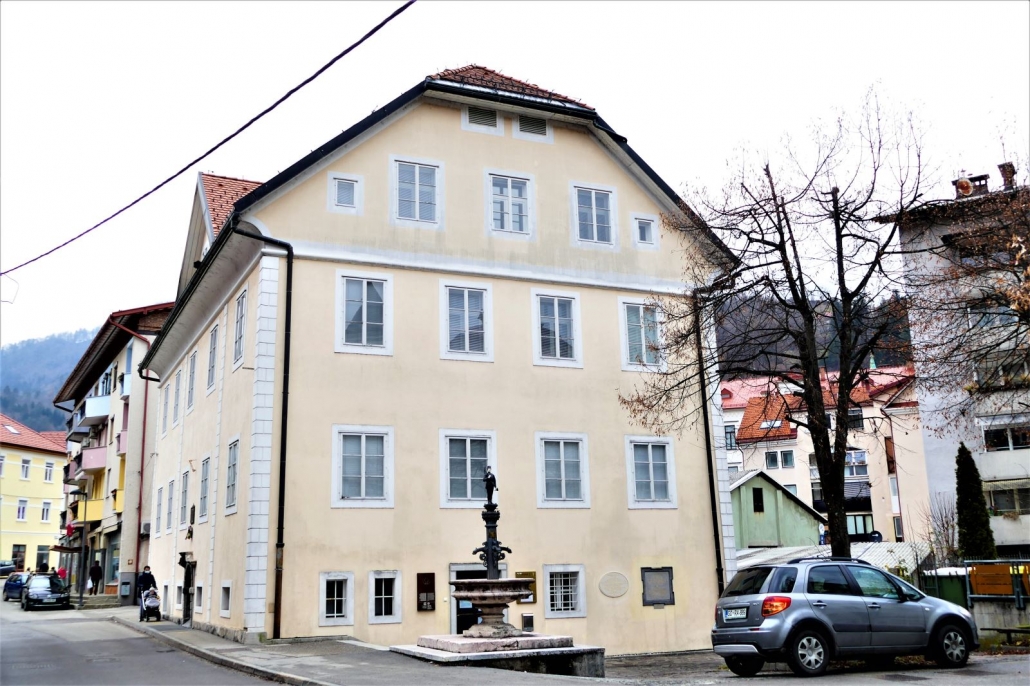
The famous natural scientist, Joannes Antonius Scopoli, the first mine physician in Idrija (1754–1769), worked in this building. A memorial plate on the building is dedicated to the memory of his work and his correspondence with the reputed Swedish scientist and princeps botanicorum mundi, Carl von Linne.

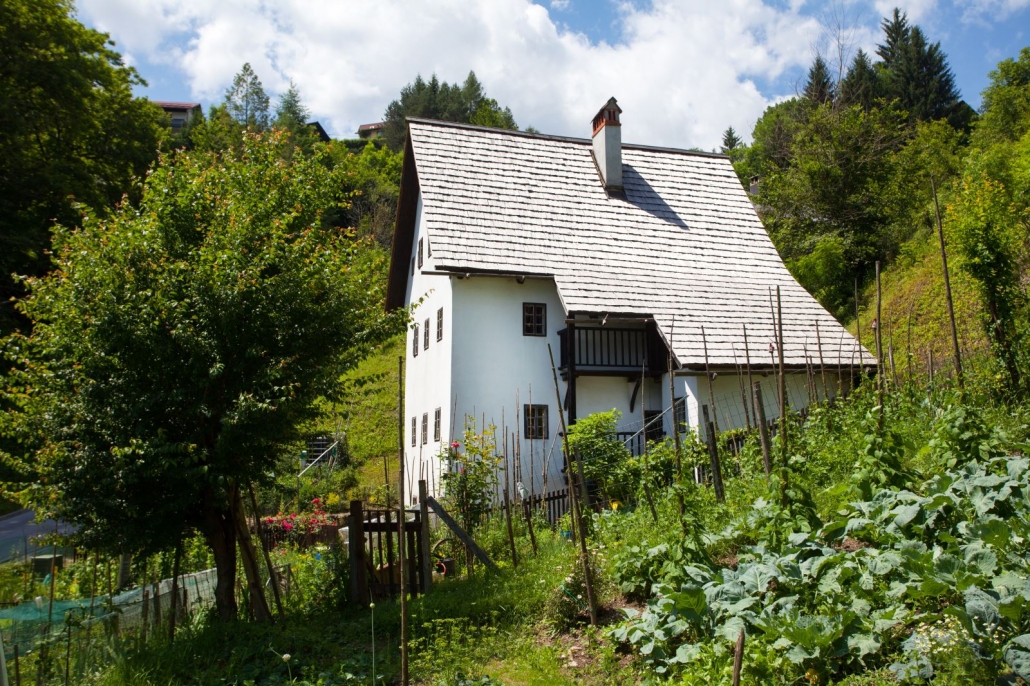
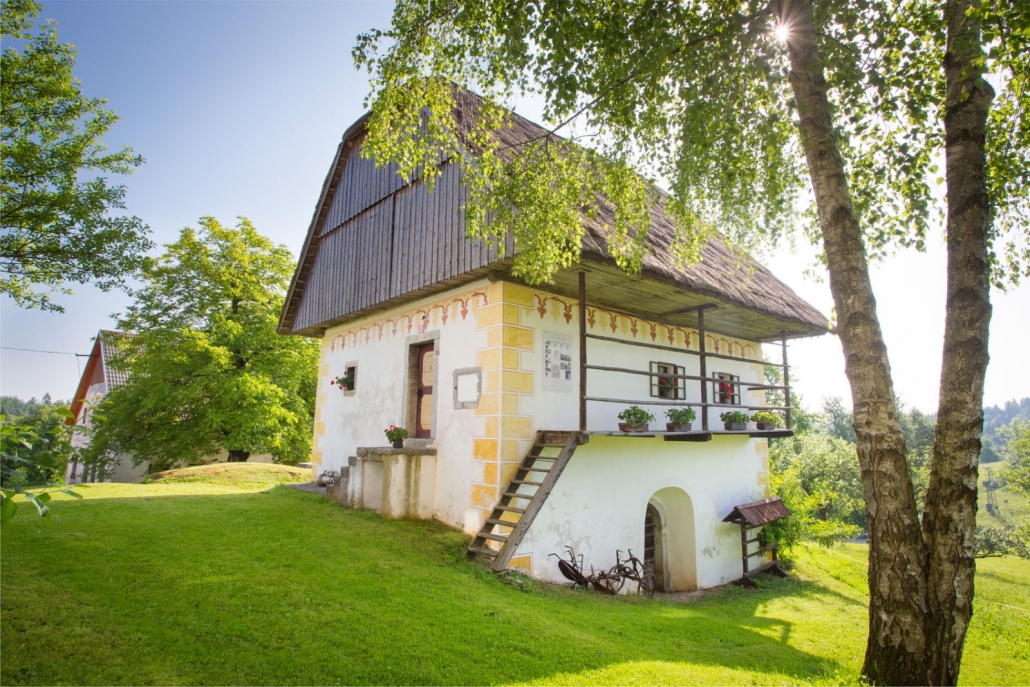
The house was built at the end of the 18th century and was renovated in the 19th century. The building features a high gable, three storeys, a basement, and an attic. It is mostly made of wood with the exception of the stone ground floor. The building is surrounded by vegetable gardens. It tells the story of the Idrija miners’ lives.

A larger building with a portal dating back to 1856. It is one of four schools of forestry established in the period of the Austro-Hungarian Empire. The school operated in 1892–1909.

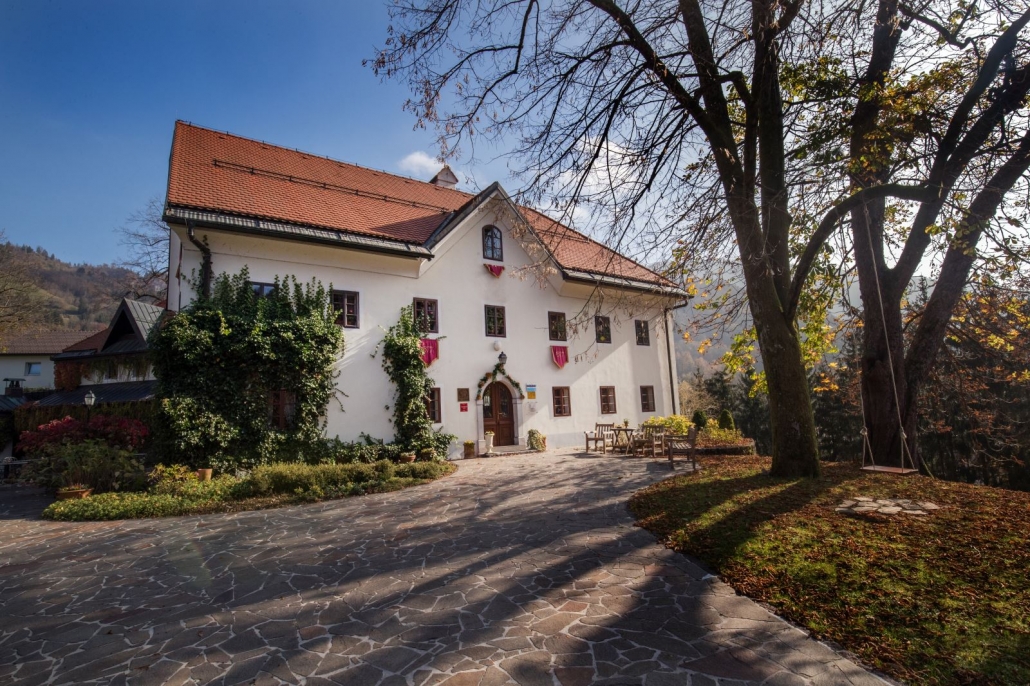
The origins of Kenda Manor go back to the year 1377, when the first landowners managed the farm above the Idrijca River Valley. Today, this magnificent building has been restored and revived in the spirit of old times, and transformed into a luxury hotel. The property also features a painted stone granary (author: F. Kobal) and a traditional toplar (double hayrack).

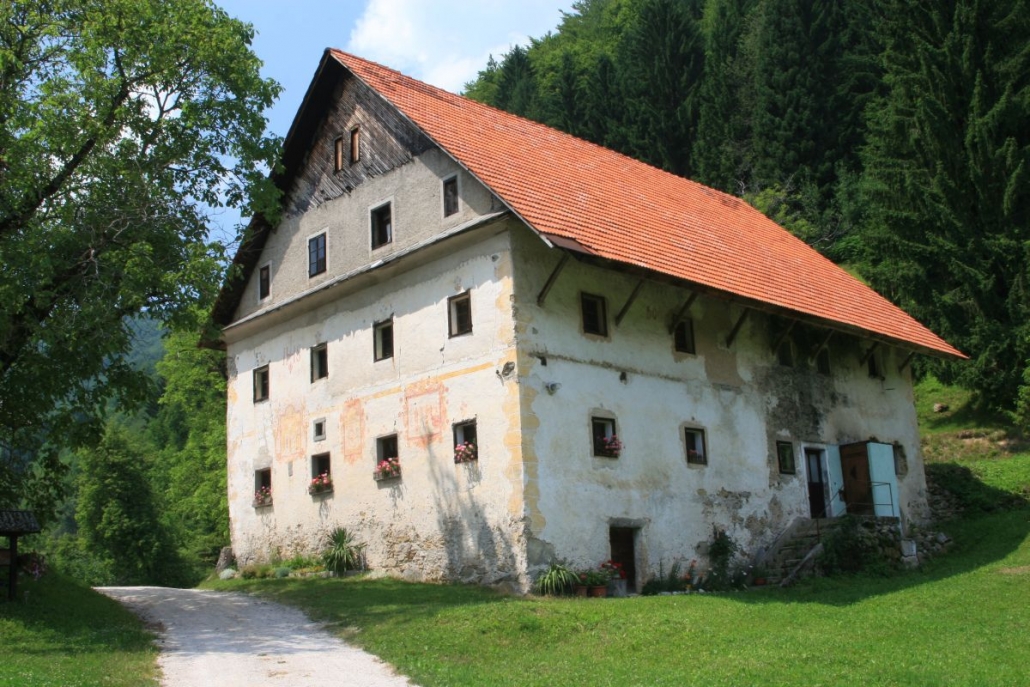
This solitary homestead of a wealthy farmer used to consist of eight buildings. Today, a large residential house, stone granary, barn, and hayrack are preserved. The house has a remarkably preserved interior and wall paintings – frescos – dating back to 1802.
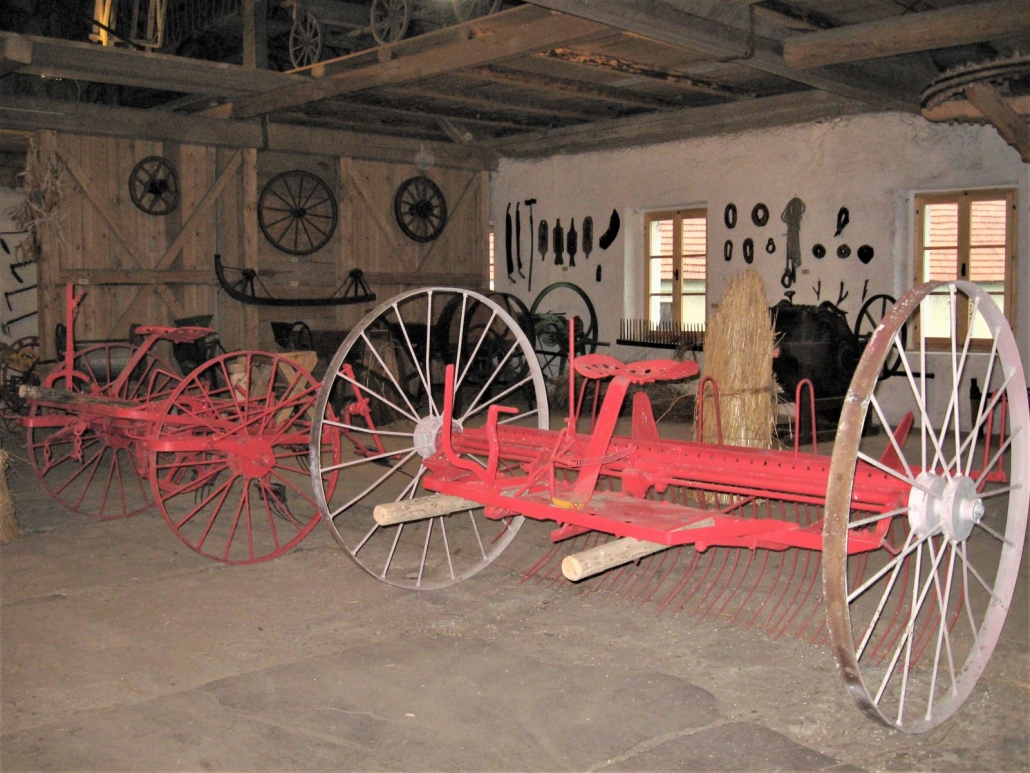
A large, single-storey house with a steep gable roof and square ground floor. Traces of wall paintings on the south and west façades. A preserved interior with a traditionally-designed arched basement, vestibule, and a smoke kitchen. On the north façade, there is a painted niche with a wooden sculpture. Arranged in the barn alongside the old house is an interesting collection of around 300 small and large antique objects of important ethnological value.
A multi-storey granary with a basement, a steep gable and thatched roof. Its stone square portal dates back to 1687. The exterior of the house with its frescos is renovated, the interior features a smoke kitchen, pottery stove in the bedroom and some traditional equipment.
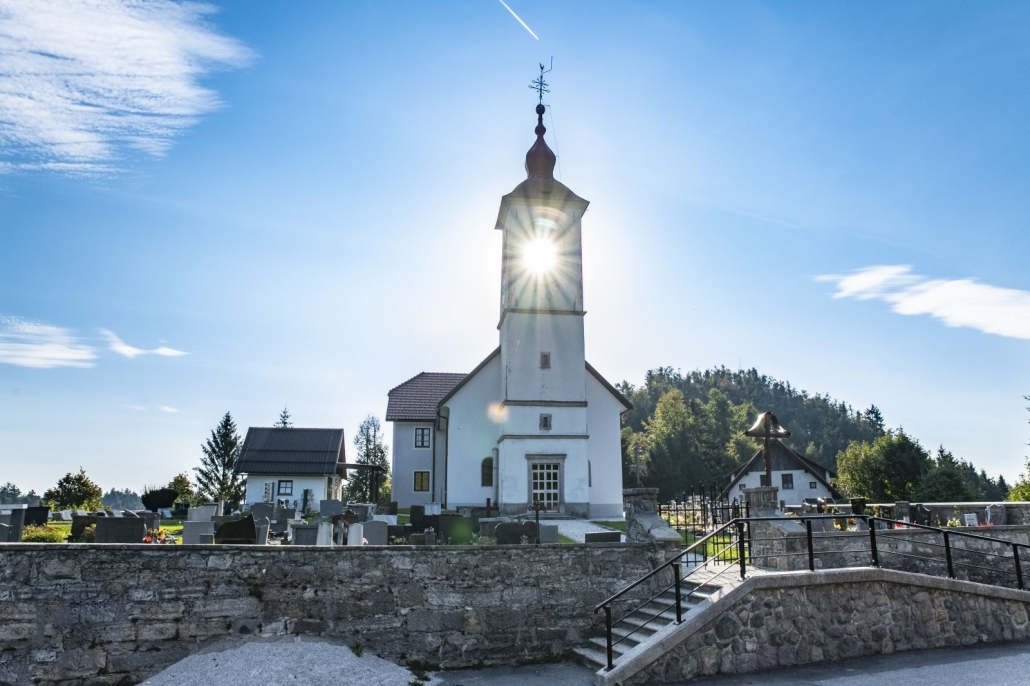
The people of Idrija turned to patron saints for comfort and help. They expressed their gratitude with various signs, chapels, and churches. There are several such sacral buildings preserved in this area.
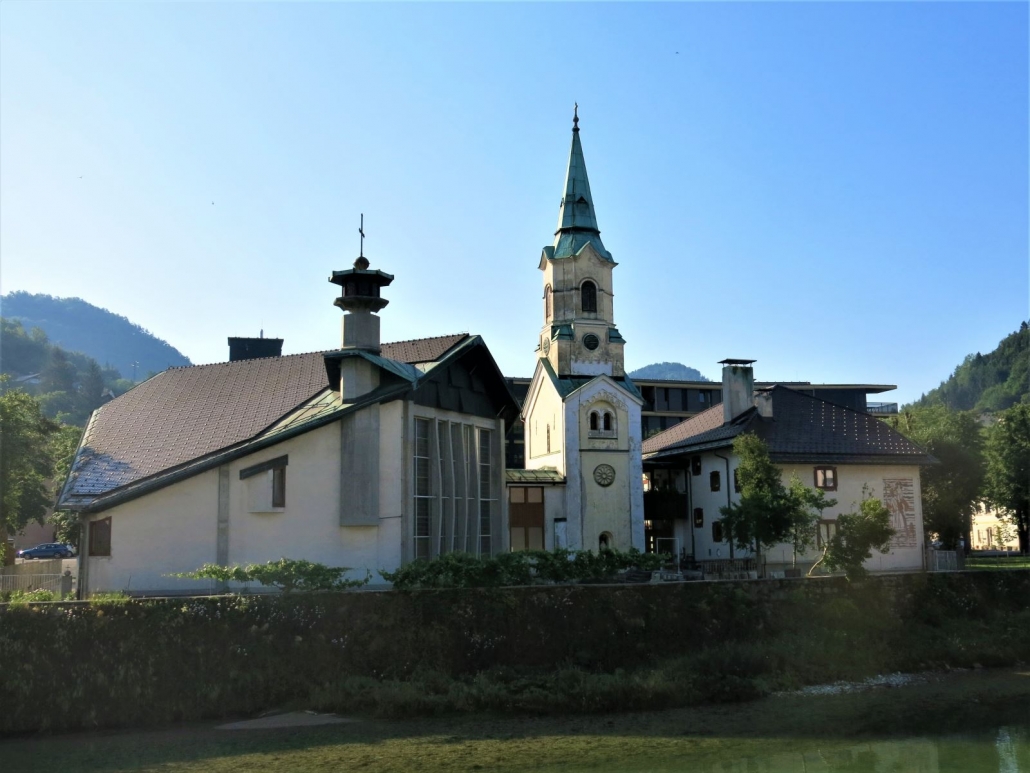
The original parish church of St Barbara in the main square was damaged in an air raid at the end of World War II and in 1951, the local government gave the order for the church to be (unnecessarily) demolished. Fifteen years later, after several requests made by a long-time local priest Janez Filipič, the government allowed for a new church to be built on the spot of the old cemetery. With the exception of the belfry, the old cemetery church of the Holly Cross was demolished and replaced by today’s parish church of St Joseph which was designed by architects Anton Bitenc and Jožef Kregar.

This church is built on the spot where, according to the legend, a tub maker discovered mercury in 1490. The original wooden church, built in 1500, was later rebuilt in stone. The presbytery is decorated with colourful stained-glass windows and noticeable symbols such as ore, chisel, and carbide lamp.
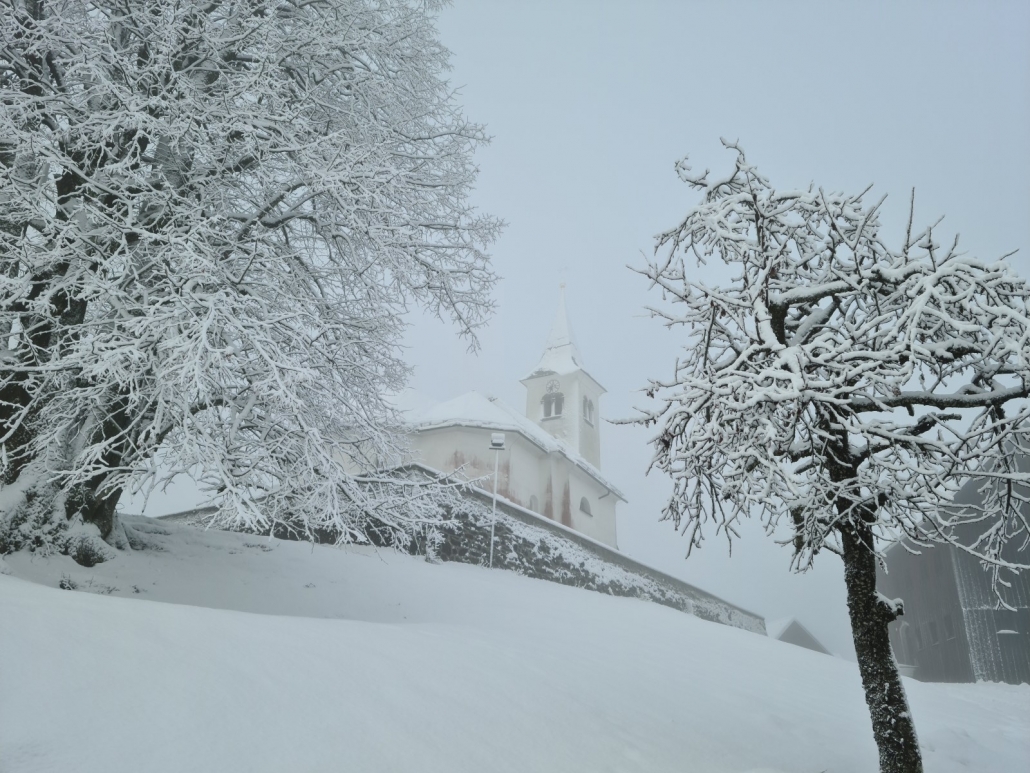
Standing on a steep slope overlooking the town is the church of St Anthony dating back to 1678. In 1766, the Stations of the Cross were built at the Calvary Hill, a rising slope west of the church.
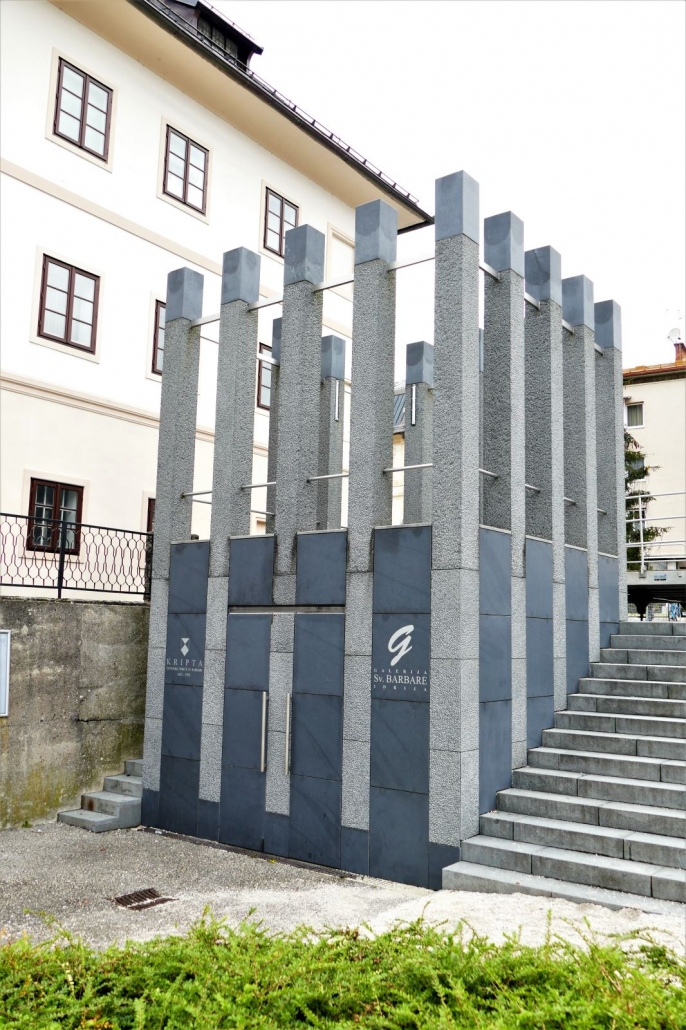
The crypt is the only preserved part of the baroque church of St Barbara which was damaged during World War II and afterwards demolished. The renovated crypt now features a gallery and a memorial chapel.
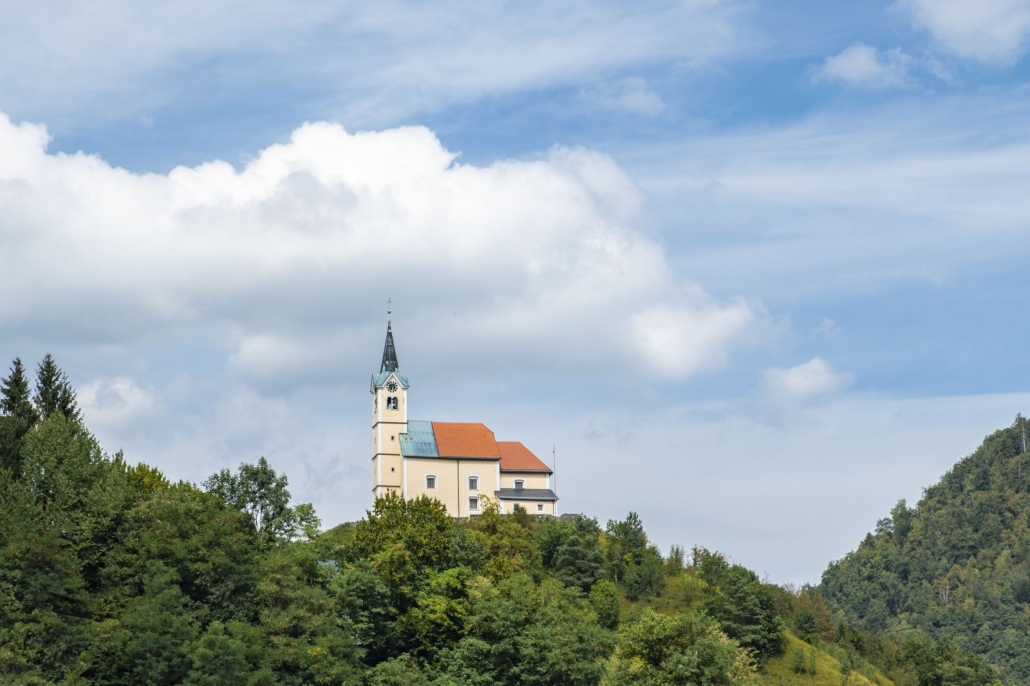
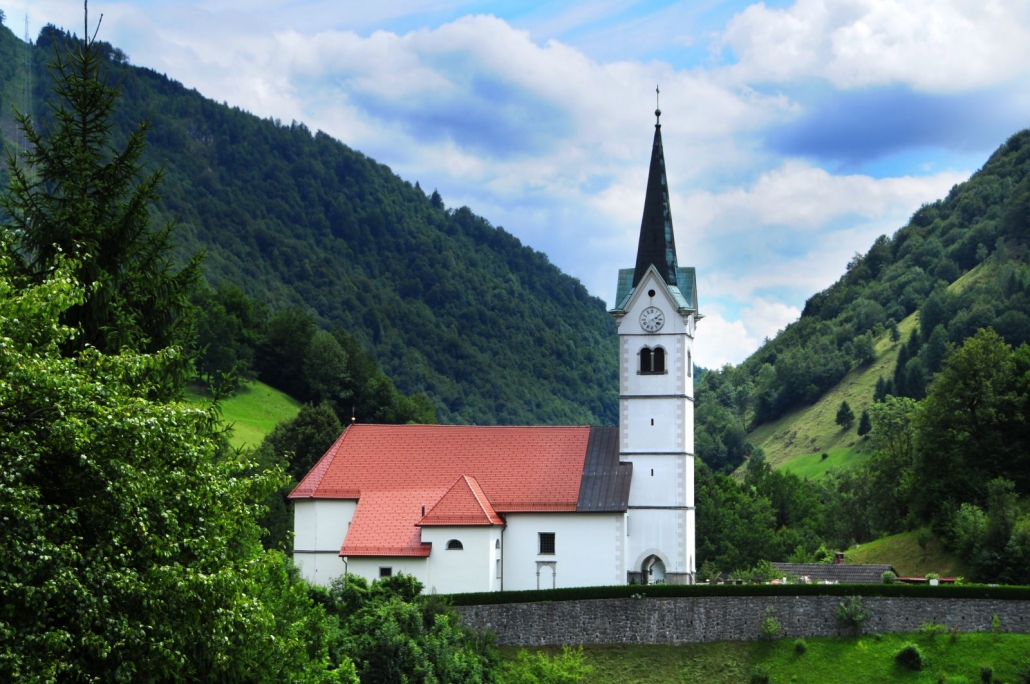
Rising above the settlement of Spodnja Idrija and the Idrijca River Valley is the renovated pilgrim Church of St Mary’s Assumption, Mary-on-the-Rock, which was first mentioned in 1156. Its impressive interior features frescoes by Jožef Mrak, which adorn the arcades, the nave and the presbytery.
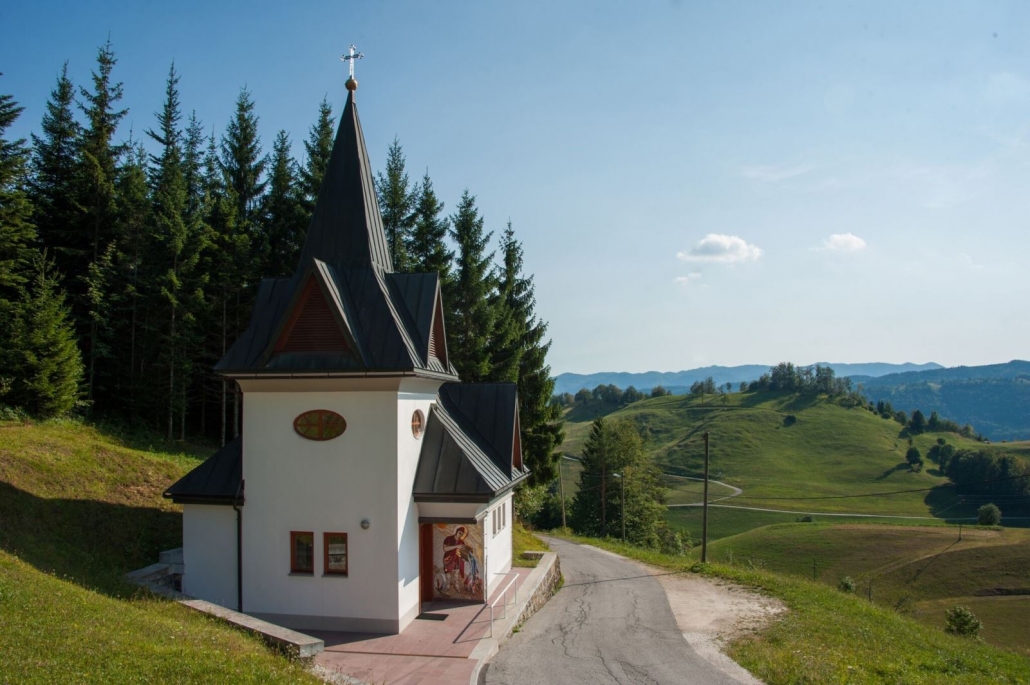
St Florian’s Church, designed by architect Cveto Koder, was built in 2001 and is known for its two beautiful mosaics by Fr Ivan Marko Rupnik. St Florian, the patron saint of firefighters, is depicted on the exterior wall overlooking the valley and protects the homes and the people, while the mosaic in the presbytery depicts an embrace of St Joachim and St Anne and Mary with Jesus, which symbolises marital and parental love.
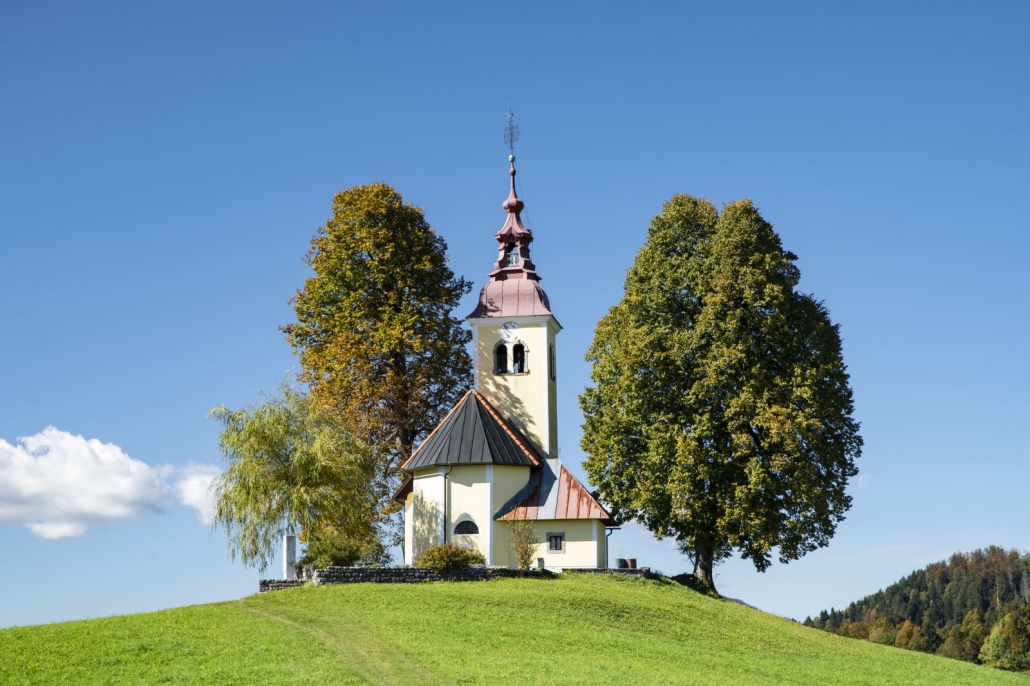
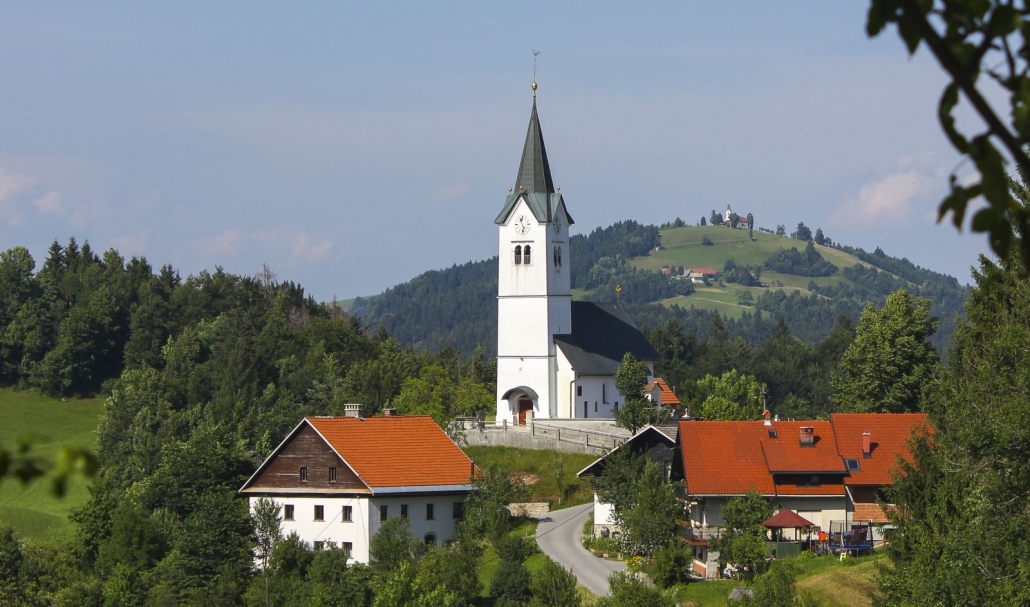
Rising on a gentle slope amid the rolling fields is the church of St Thomas protected by two large linden trees. From here, there is a beautiful view of Mount Triglav and the Kamnik-Savinja Alps.
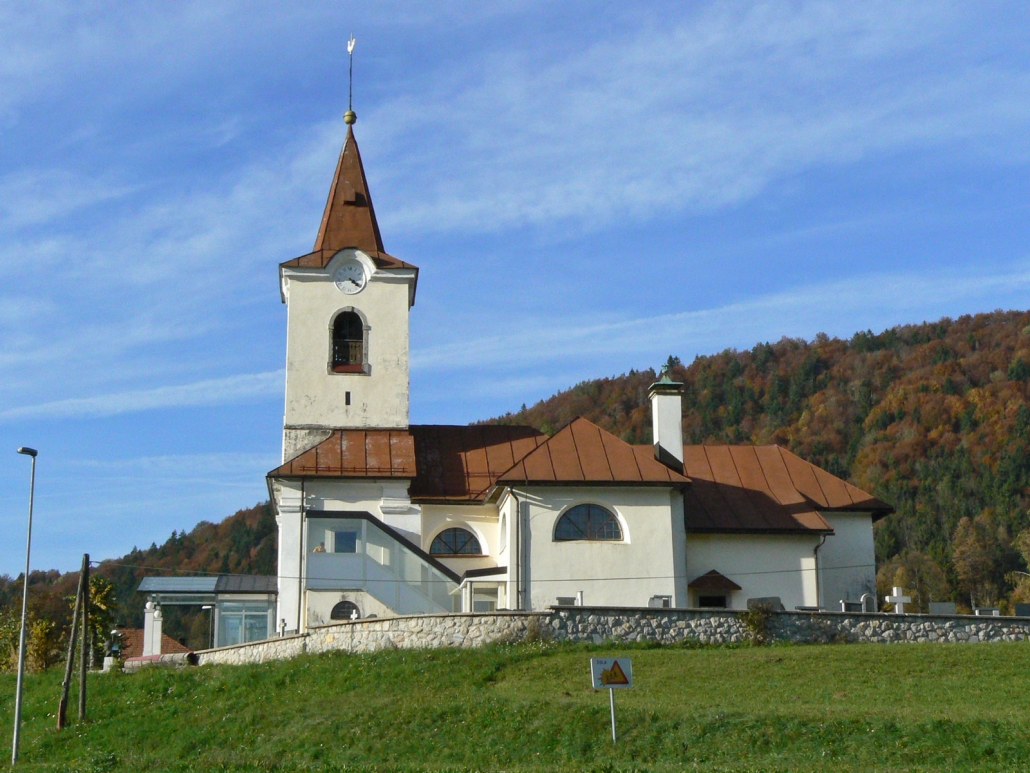
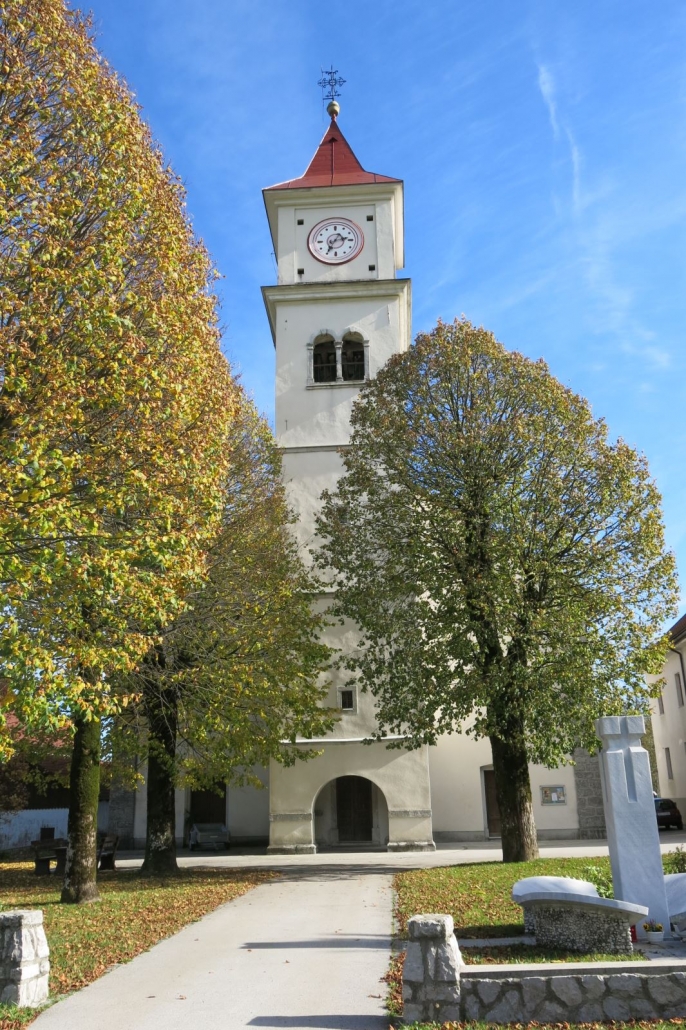
The parish church St Urban (pope and martyr) is located in the centre of the village and was first mentioned in 1526. Today’s church was built in 1656 and has three altars. In 1685, the church was expanded and extensively renovated. Throughout history, it was damaged multiple times and gained its current form in 1756. During World War II, only the belfry was damaged and was later rebuilt in a slightly smaller and plainer form.
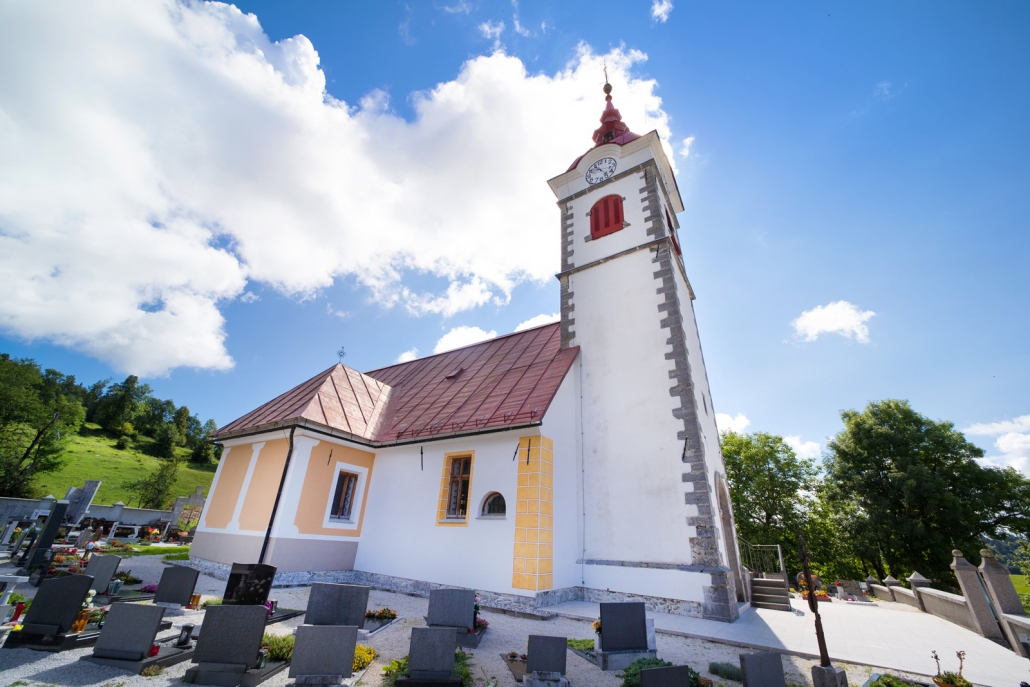
The baroque church of St Urlich surrounded by a wall is located on a hill south-east of Zavratec and bears the year of 1647; however, it was first mentioned in the land registry of the Škofja Loka Lordship in 1501. It consists of a three-part presbytery, a wide rectangular nave and a belfry on the west. The nave and presbytery are decorated with baroque frescos dating back to 1713. The church is also connected to four chapels nearby that are over200 years old.
The historical records describing the church of St Mary Magdalene (which was first a chapel and later expanded several times) date back to the 6th century. The village and the church are also mentioned in records about the Turkish invasions and in the late Middle Ages, this location supposedly served as cemetery for the local region. The church as we know it today dates back to 1823 and was made a parish church in 1867.
The church of St Judoc dates back to 1570 and is the central cultural and historical monument in Črni Vrh. Throughout history, this sacral building was often rebuilt, which is why it features many different styles. The presbytery has a large baroque altar made in the late 17th century and the newer St Judoc’s statue from the late 19th century. Today, the church is still an important cultural center of the town.
The church of St Jacob was first mentioned in 1540 but was built in today’s form in 1666. The beautiful altar paining of the patron saint was painted in 1877 by the renowned Slovenian painter Janez Šubic.
The church in Vojsko was built in the 17th century and expanded in 1669. In the beginning, its main patron saint was St Wolfgang, the patron saint of carpenters and wood workers. It is not known when and why it was renamed as the church of St Joseph. The interior features two side altars and the main altar dedicated to St Joseph. The nave ceiling is decorated with frescoes that were rediscovered in 1983.